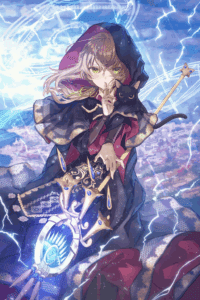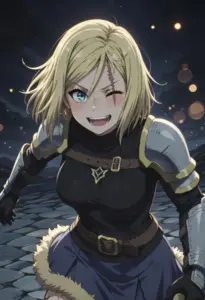
In 2025, the global anime and manga ecosystem is undergoing one of its most significant structural shifts since the transition from cel animation to digital production. Artificial intelligence, once viewed primarily as a productivity tool for large studios, is now reshaping creative ownership, production pipelines, and the economics of storytelling. Independent manga writers and artists, historically constrained by publishing gatekeepers and production costs, are increasingly teaming up with AI powered video and animation tools to bring their stories directly to audiences.
This convergence is not without controversy. It sits at the intersection of artistic authenticity, labour ethics, copyright law, and technological acceleration. Yet its momentum is undeniable, and its implications reach far beyond niche online fandoms.
From Traditional Pipelines to Algorithmic Collaboration
Anime production has long been defined by rigid hierarchies and resource intensive workflows. Even mid tier television series typically require hundreds of artists, months of storyboarding, and tightly managed schedules. Independent manga creators, especially those working outside Japan’s major publishing houses, often struggle to bridge the gap between static illustration and full animation.
AI driven tools have begun to alter this imbalance. Image generation models, motion interpolation systems, voice synthesis, and automated compositing allow small teams, or even individuals, to prototype animated scenes that previously required studio level investment. What once demanded a committee can now begin with a laptop.
For many creators, AI is not replacing drawing or writing, but compressing the distance between idea and execution. Rough storyboards can be transformed into animated previews, background art can be generated at scale, and early pilots can be released to test audience interest before any formal funding is sought.
Independent Manga Creators Gain Leverage
The most visible beneficiaries of this shift are independent manga writers. In 2025, web first publishing platforms, subscription based fan communities, and decentralised funding models have become standard pathways into the market. AI generated animation adds a new layer, allowing creators to pitch moving visuals rather than static panels.
This has changed negotiating power. Instead of selling rights to publishers or studios early, creators can retain ownership while demonstrating audience traction through short form animated releases. Some creators are releasing episodic AI assisted anime adaptations alongside their manga chapters, blurring the line between source material and adaptation.
The result is a new creator profile, part writer, part director, part technical operator. These creators are not necessarily less artistic. In many cases, they are deeply involved in character design, world building, and narrative structure, using AI as an accelerant rather than a substitute.
The Tools Behind the Movement
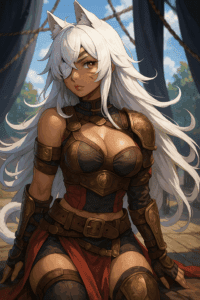
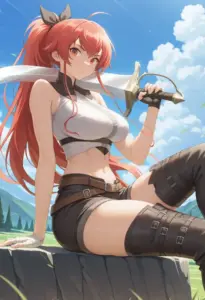
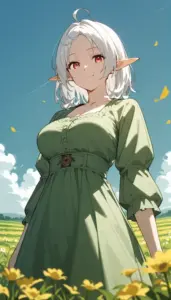
The technological foundation of AI generated anime is diverse. Text to image systems generate character concepts and environments. Image to image models refine sketches into consistent art styles. Video generation and frame interpolation tools animate still images into fluid motion. Voice models provide placeholder dialogue, often replaced later by human actors.
Companies such as OpenAI and Stability AI have contributed foundational technologies, while smaller startups focus specifically on animation workflows. These systems are increasingly modular, allowing creators to combine traditional hand drawn elements with AI generated assets.
Importantly, most successful independent projects in 2025 are hybrid in nature. Artists still draw key frames, define facial expressions, and control composition. AI handles scale, repetition, and iteration.
Industry Anxiety and Labour Concerns
The rise of AI assisted anime has generated understandable anxiety within the professional animation workforce. Concerns centre on job displacement, wage suppression, and the erosion of craft. Many animators fear a race to the bottom, where studios prioritise speed and cost over quality and human expertise.
Labour unions and industry groups have responded by pushing for clearer disclosure requirements and ethical guidelines. In Japan, debates continue around whether AI generated sequences should be credited differently, and how training data sourced from existing anime works should be regulated.
Some studios have adopted AI internally while publicly distancing themselves from fully automated production. Others, particularly in streaming focused markets, are more open to experimentation, seeing AI as a necessity in an era of relentless content demand.
Artistic Authenticity and Audience Perception
Audience reaction to AI generated anime is complex. While some viewers reject it outright, citing a loss of soul or emotional depth, others prioritise storytelling and character resonance over production methods. In many cases, viewers are unaware that AI was involved unless it is explicitly disclosed.
Independent creators often lean into transparency, documenting their workflows and positioning AI as a collaborative tool. This openness has helped build trust with audiences who value honesty over purity.
Quality remains the decisive factor. AI generated animation that feels generic or inconsistent is quickly dismissed. Projects that use AI to enhance, rather than replace, artistic vision tend to fare better, reinforcing the idea that technology alone does not guarantee success.
Copyright and Legal Grey Zones
One of the most unresolved aspects of AI generated anime in 2025 is copyright. Questions persist about who owns AI assisted outputs, particularly when models are trained on vast datasets that include copyrighted material. Jurisdictions vary widely in their responses, creating uncertainty for creators seeking global distribution.
Independent manga writers face particular risk. While AI allows them to move faster, it also exposes them to legal scrutiny if their outputs resemble existing styles too closely. Some creators now invest in custom trained models based exclusively on their own artwork to mitigate risk.
Platforms hosting AI generated anime are also navigating liability concerns, introducing stricter content policies and takedown mechanisms. The legal landscape remains fluid, and many creators operate with cautious optimism rather than certainty.
New Genres and Experimental Storytelling
AI has also influenced the kinds of stories being told. Short form, experimental anime formats have flourished, particularly on social platforms. Micro episodes, looping narrative fragments, and interactive story paths are easier to produce when animation costs are reduced.
Independent creators are exploring niche genres that would struggle in traditional broadcast models. These include highly stylised psychological dramas, abstract science fiction, and culturally specific stories aimed at small but passionate audiences.
In some cases, AI generated anime functions as a proof of concept, later refined into fully hand animated productions once funding is secured. In others, the AI assisted format is the final product, embraced for its immediacy and flexibility.
The Studio Response
Established studios have not been passive observers. Some have invested heavily in proprietary AI tools, integrating them into pre production and post production stages. Others collaborate directly with independent creators, acquiring projects that have already demonstrated audience appeal.
Studios such as MAPPA and Toei Animation publicly emphasise human craftsmanship while quietly experimenting with AI assisted workflows. The prevailing strategy is cautious adoption, balancing efficiency with brand identity.
There is also a growing trend of studios offering mentorship and infrastructure to independent creators, recognising that grassroots innovation often precedes mainstream success.
Ethical Frameworks and the Push for Standards
As AI generated anime becomes more visible, calls for ethical frameworks have intensified. Key issues include consent for training data, fair compensation for human contributors, and transparency for audiences.
Industry bodies and creator collectives are drafting voluntary standards, though enforcement remains inconsistent. Some platforms now require disclosure tags for AI assisted content, while others leave disclosure optional.
For independent manga writers, ethical clarity can be a competitive advantage. Projects that articulate clear values around authorship and collaboration tend to attract more loyal audiences and long term support.
A Redefined Creative Economy
The alliance between independent manga creators and AI generated animation reflects a broader shift in the creative economy. Power is moving away from centralised institutions toward adaptable individuals and small teams. Barriers to entry are lower, but competition is fiercer.
Success increasingly depends on narrative originality, audience engagement, and ethical credibility rather than sheer production scale. AI amplifies both strengths and weaknesses, rewarding those with clear vision and exposing those who rely solely on automation.
In 2025, AI generated anime is neither a novelty nor a replacement for traditional animation. It is a parallel ecosystem, evolving rapidly and reshaping expectations.
Looking Ahead
The long term impact of AI on anime and manga will depend less on algorithms and more on governance, culture, and creative intent. Independent manga writers partnering with AI tools represent a test case for how technology can democratise storytelling without hollowing it out.
The next phase will likely involve deeper hybridisation, where human artistry and machine assistance are inseparable. Audiences, studios, and creators will continue to negotiate what authenticity means in this context.
What is clear is that the rise of AI generated anime is not a passing trend. It is a structural transformation, redefining who gets to tell stories, how they are told, and who ultimately controls their futures.